Orthodontic Treatment
Braces / Clear Aligners
What are braces?
Braces are metal brackets that are glued onto your teeth to transmit forces from the wires and auxiliaries to help move teeth to its desired position. With the advancement of this specialty there are now brackets that are self-ligating, brackets that are made from ceramic and the latest clear aligners that are removable to help make it more acceptable to patients who do not like the appearance of metal in their mouth.
Metal Braces
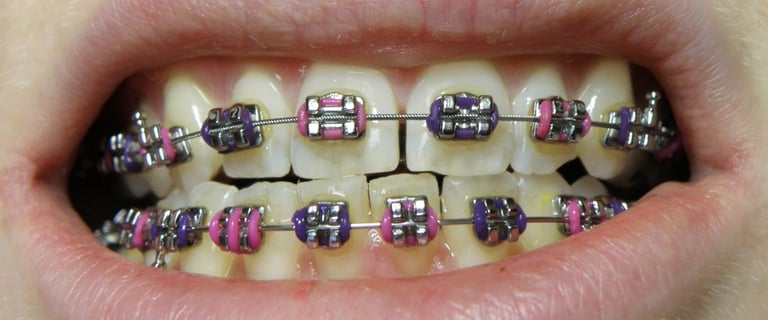
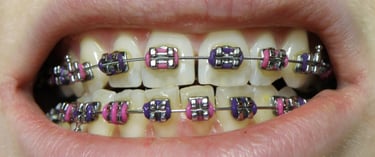
Metal braces are one of the oldest innovations created to help correct the positions of teeth. Even though it might be aesthetically not as appealing as the other options; it has one of the best control of teeth movement.
Clear Aligners
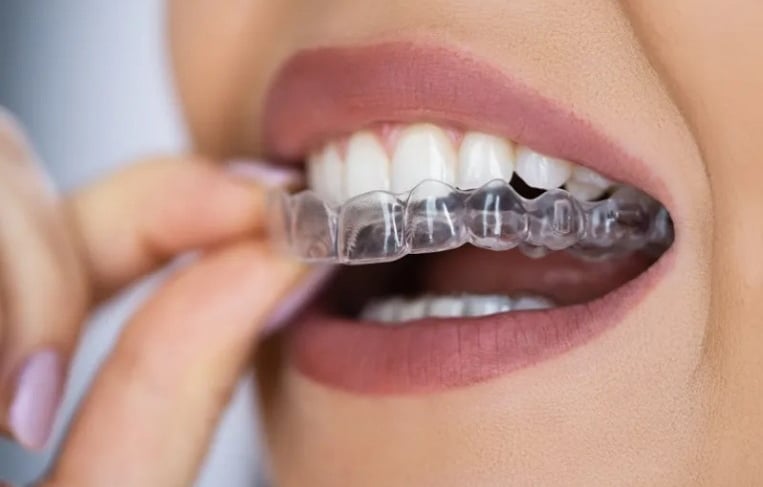
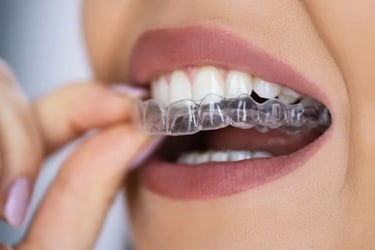
Clear aligners are the latest introduction to the orthodontic world. They are clear plastic like moulds of your teeth that help push your teeth to its designated positions. It is much less visible compared to the other options that help aligns teeth. It can be removed easily during eating and cleaning/brushing of your teeth. However, you have to be compliant and make sure you wear it everyday except during meals. Or your treatment will be delayed. Sometimes, you will need to wear braces for a few months for final finishing touches.
Usually, a set of aligners will be custom plan for you. The number of aligners prepared depends on the complexity/severity of your case. The dentist will then instruct you to change the aligners every 1-3 weeks, and the dentist will need you to come in for review from time to time to check on your progression.
What to expect when wearing metal braces?
You may feel some initial discomfort when it is first placed on your teeth, which you will gradually get use to after a period of time. In fact, some patients even feel like something is missing when they remove their braces. Initially you may have some difficulty eating with it, which with time you will eventually get used to it. It is advised to cut your food into small bite size pieces to prevent the metal brackets from getting knocked off. You may feel some force on your tooth after each review visit. The forces are to activate tooth movement and it will dissipate with time. Thus, it is important to go for your regular review visits. It is important to take note that there is a limit of forces that can be applied to the teeth within a designated period to allow safe movement of your teeth that is not deleterious to your teeth.
Do I need to remove my teeth?
We might have to remove some teeth to help create space to align your crowded teeth or pull back your protruded teeth. Do not worry, for we will make sure you are well numb up before removing any teeth and anti-inflammatory medications will also be given to help with the pain after removal of tooth.
What to expect when going for an Orthodontic consult/ first orthodontic visit with the dentist?
The dentist will normally ask what you don’t like about your teeth/ what you are dissatisfied with your teeth. So, make sure you have a clear idea of what you are not happy with your teeth and tell it clearly to your dentist. This will help create a better treatment outcome for your teeth.
The dentist will then take an impression of your teeth or a 3D scan of your teeth for reference and treatment planning.
X-rays such as OPG and Lateral Cephalometric will also be taken.
The doctor may then schedule you another appointment to discuss the treatment options that are available for you and which treatment plan is best for your case.
Are there any other additions to the braces/clear
aligners to help with tooth movement?
Sometimes, we may need to add extra tools(example: Elastics, Maxillary expanders(Upper Jaw expanders), TADs(mini-screws), Headgears...) to help increase the effectiveness of the tooth movement or treatment outcome.
Can kids get braces too?
If your child is having problems with her bite. (Example: crowding, or Upper protruding teeth or Reverse Bite.)
You can visit the dentist and have it checked. As there are interventions that can be taken during the growing phase to help reduce the severity of the problem later on.
Interventions such as a headgear that helps encourage growth of the upper jaw, or an appliance worn inside the mouth to help expand the upper jaw or guide the lower jaw to grow forward. Appliances (Habit breakers) are also given when there are bad habits such as thumb sucking that needs to be addressed.
How long do I need to wear braces?
It usually takes around 3 years++, it can be longer if your case is complex.
Kids will usually take 2 separate phases to treat, the first phase is to use their growing phase to our benefit to help reduce the bite problem they are having, so that when it comes to the second phase they either would not need further treatment or they will have a shorter treatment phase to fix the problem.
What can Braces/Clear Aligners help fix?
It can help fix problems such as:
-Protruded teeth
-Retruded teeth
-Reverse Bite
-Gaps in between teeth
-Gummy smiles
-Overbite/Deep Bite
-Crossbites
-Crowding
-Rotated teeth
-Open Bite
Can braces fix skeletal problem, such as a small jaw or a big jaw?
Surgery might be needed alongside braces/aligners in some cases to help fix skeletal problems.
How do I keep my teeth clean when wearing braces?
Use an ortho tooth brush to brush daily, you can use a water flosser to help remove debris that are stuck in between your wire and brackets. You will also need to floss in between your teeth with a special floss/ dental floss threader. To prevent caries, you can apply a hydroxyapatite and fluoride rich paste around your teeth for 3-4 times a week, which you leave on for a few minutes and then spit out.
Do I need to wear retainers for life?
Yes, it is advisable to wear it lifelong as your teeth will have the tendency to shift back to its natural position. Normally the dentist will advise you to wear it 24hours except during meal times for 6 months before changing it to night time only wear. If you do not wear it for life your teeth may shift back to its natural position and you will need to do redo your braces/clear aligner treatment to get it align again.
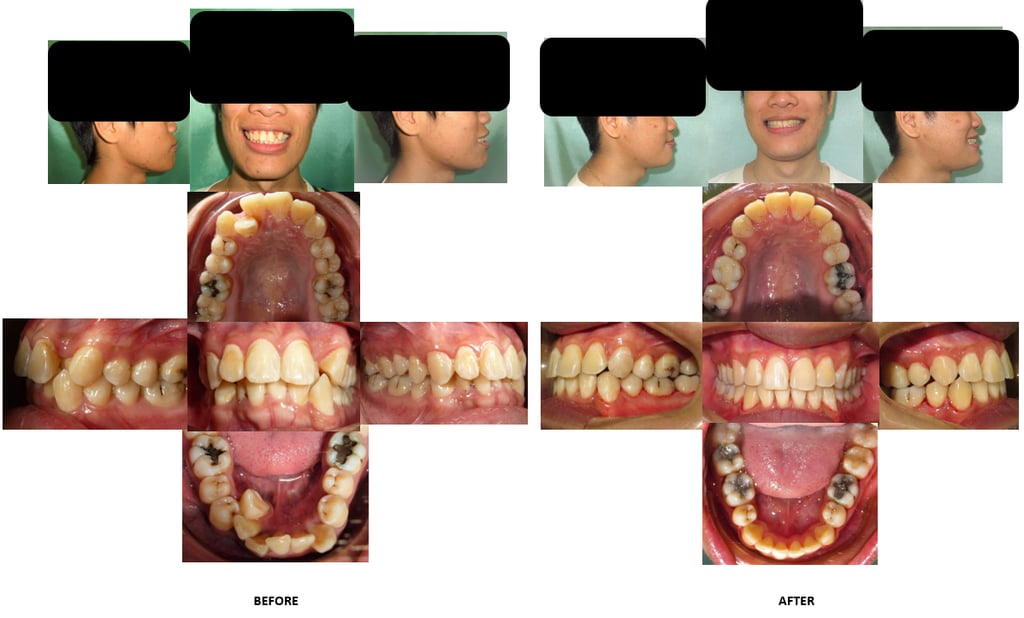
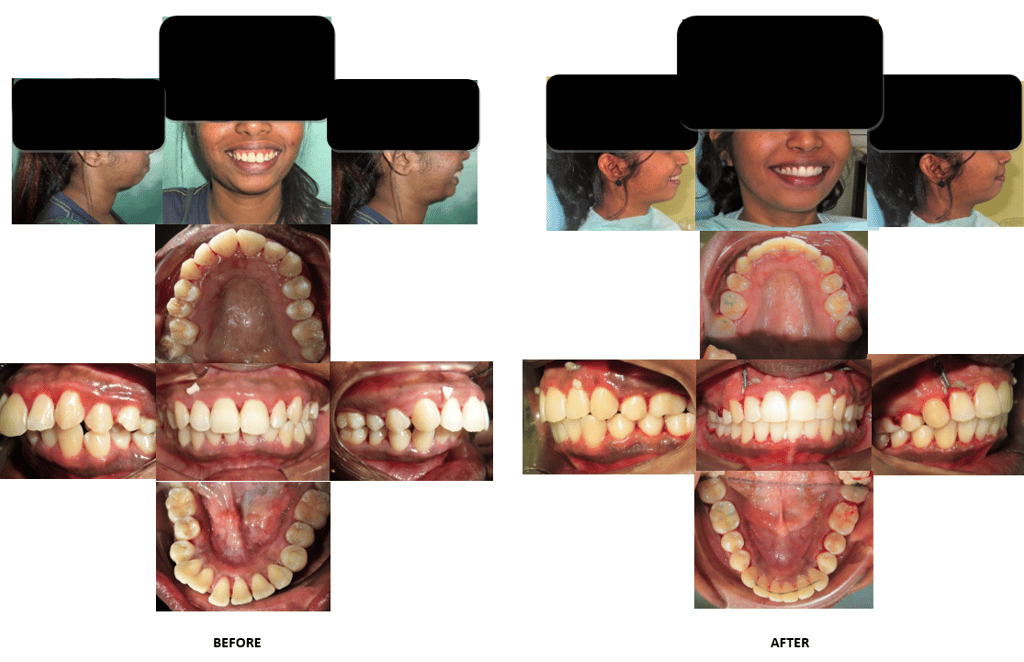
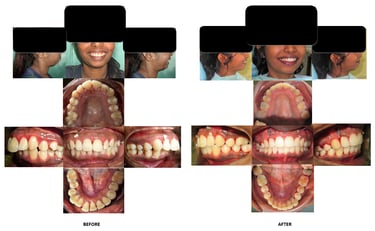
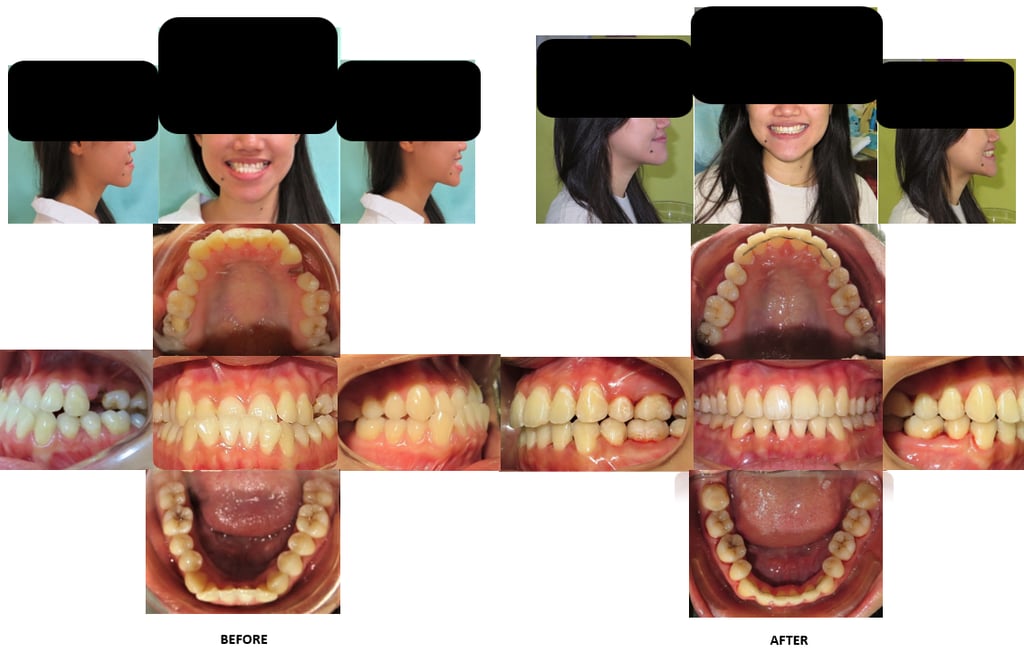
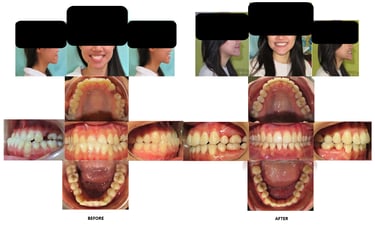
Examples of what braces can do to fix teeth:
CASE 1: Class 1 malocclusion with severe crowding at the upper and lower labial segment.
Contact us
Join us at Cornerstone Dental Specialist for gentle, family-friendly care. Schedule your visit today for a healthier, happier smile.
Phone
© 2025. All rights reserved.
Our Location
Address
Opening Hours
Monday - Saturday : 10am-6pm
Sunday : Closed
Cornerstone Dental Specialist offers a calm, welcoming space for your dental care.