
🦷 Root Canal Treatment (RCT)
Save Your Tooth. Eliminate Pain. Restore Your Smile.
😣 Tooth Pain? It Could Be an Infection
A persistent toothache, sensitivity to hot or cold, or swelling may indicate an infection deep inside your tooth.
Root canal treatment is a safe, effective procedure that removes infection, relieves pain, and saves your natural tooth—so you can avoid extraction.
💡 What Is Root Canal Treatment?
Root canal treatment (RCT) is a procedure where the infected pulp (nerve tissue) inside your tooth is carefully removed. The tooth is then cleaned, disinfected, and sealed to prevent further infection.
✅ Stops pain
✅ Eliminates infection
✅ Preserves your natural tooth
🚨 Signs You May Need a Root Canal
Severe or lingering tooth pain
Sensitivity to hot or cold that doesn’t go away
Swelling or tenderness in gums
Darkening of the tooth
Pain when biting or chewing
Don’t ignore these signs—early treatment prevents complications.
👍Benefits of Root Canal
No need to extract the tooth
Ability to eat with natural teeth
Delay of prosthesis( denture, implant, bridge..) replacement.
👩⚕️What are the steps in root canal?
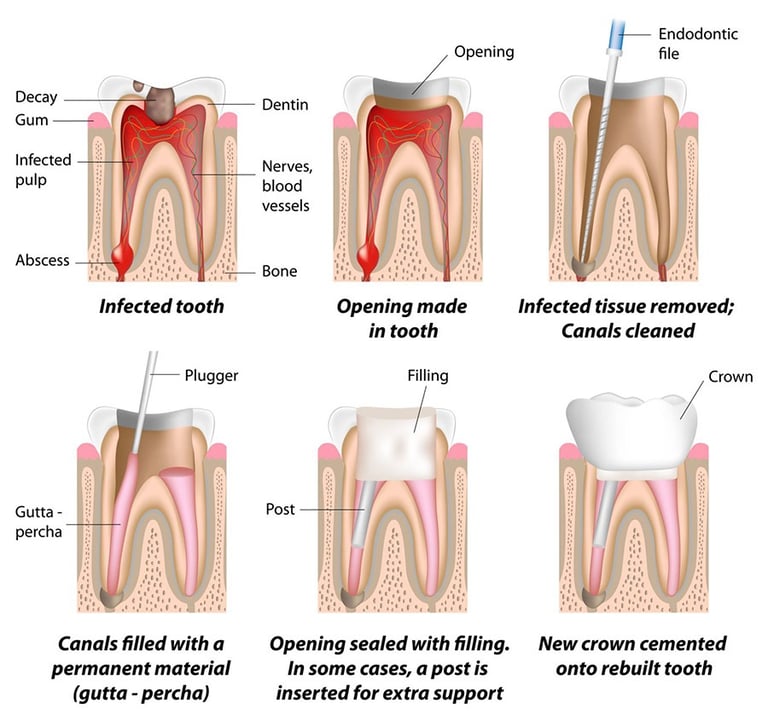
Root Canal treatment usually requires 3-4 visits for the treatment to be completed, depending on complexity of the tooth's root canals. A crown will then be usually recommended after root canal to prevent the tooth from breaking. Sometimes the doctor will advise you to place a post into the root canal to help anchor and rebuild a tooth that has lost most of it's tooth structure.
1st Visit
Step 1: The doctor will take an X-Ray to check the condition of the tooth and it's roots.
Step2: The doctor will then numb you up with a numbing cream and a numbing injection.
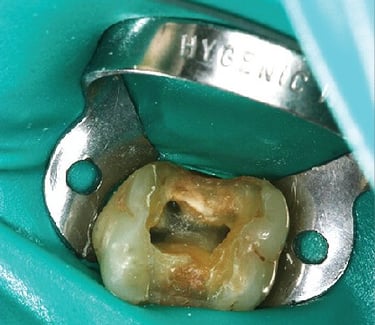
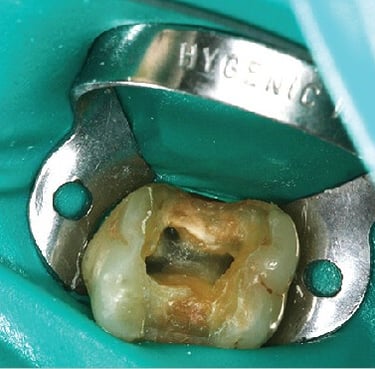
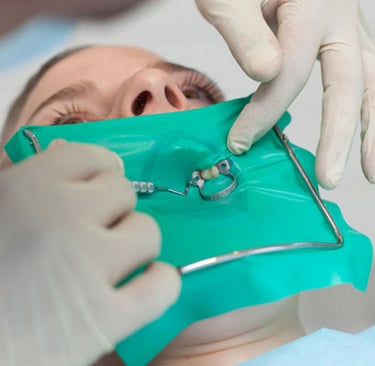
Step3: A rubber dam or a rubber sheet will then be placed over your tooth to prevent saliva from contaminating the working field.
It also acts as a barrier to the chemicals that would be used to clean and disinfect the root canal.
Step4:The doctor will remove any decay and make an opening from the top of your tooth to find the root canal and remove the dead and infected tissues inside the root canal.
Step5: After removing and cleaning the dead tissues the doctor will then put a medication inside the canal and temporarily close the hole with a temporary filling.
Step6: Medications such as pain relievers and antibiotics will then be given to you.
** Do take note that sometimes the doctor will also measure the working length of your root canal after removing the dead infected tissues from the root canal at the same visit, if the doctor sees appropriate to do it then. Another X-Ray will be taken to get the measurement of the length of your roots.
2nd Visit (usually after 1 week)
Step1: Numbing cream and numbing injection will be given. Rubber dam/sheet placed over tooth.
Step2: Temporary cement removed.
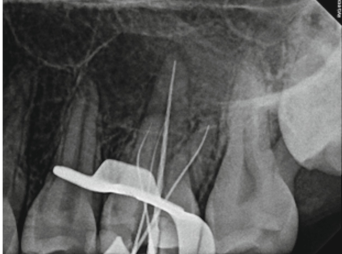
Step3: Root canals will be measured and another XRAY will be taken to get the measurements of the root canals.
Step4:With that measurement, the root canals will be cleaned and shaped accordingly.
Step5: Medication will be placed into canals and closed up temporarily with a temporary filling.
3rd Visit (usually after 1 week)
Step1: Numbing cream and numbing injection will be given. Rubber dam/sheet placed over tooth.
Step2: Temporary cement removed.
Step3: The root canals will then be filled up with a designated filling material for root canals.
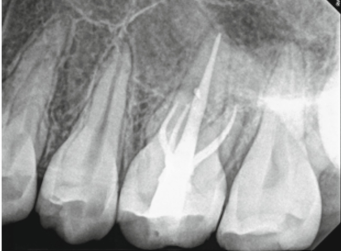
Step4: Another XRAY will be taken to ensure the root filling material fills up the root canals.
Step5: Permanent Filling of the tooth cavity hole.
**If the doctor advises you to place a post into the root canal, you will need to come in for another visit to place the post and rebuild the tooth structure with permanent filling. Therefore, the doctor will place a temporary filling first for you during this 3rd visit.
❗Do take note that frequency of visits may vary depending on the complexity of the case and how your body responds to the treatment.

❓FAQ:
1) Will there be pain?
Usually there will be no pain during treatment as numbing cream and injection will be given before starting treatment. However, you might experience mild pain after the treatment when the numbing injection wears off after 2-3 hours. This pain will normally subside after 2-3 days, with the help of medications.
2)How do I care for the root canal treated tooth in between visits before completion?
Brush and floss as usual, but try to avoid eating hard food on that tooth as it is still in a weak state. If the tooth fracture before completion of the root canal, the tooth may have to be removed if it fractured beyond a restorable state.
3)What if I skipped or stop going for the following visits to complete my root canal?
If you delay the completion of the root canal treatment, your tooth may fracture, the temporary cement may dislodged exposing the root canal to saliva and food debris causing contamination of the root canal. You may also experience flaring up of the tooth again leading to pain and swelling.
4)Why is my root canal treated tooth having pain again?
Sometimes a root canal treated tooth may have pain reoccur again due to reinfection of the root canal caused by remains of dead tissues in the canal. Fractured tooth roots. Or Gum diseases. The dentist may then remove the old filling from the root canal and clean the root canal once again to help remove the infection.
5)How long is the procedure for every visit?
It can range from 60minutes to 90 minutes depending on complexity of the case.
Contact us
Join us at Cornerstone Dental Specialist for gentle, family-friendly care. Schedule your visit today for a healthier, happier smile.
Phone
© 2025. All rights reserved.
Our Location
Address
Opening Hours
Monday - Saturday : 10am-6pm
Sunday : Closed
Cornerstone Dental Specialist offers a calm, welcoming space for your dental care.